The Real Cost of Running a Hospital Without an ERP System in Nigeria
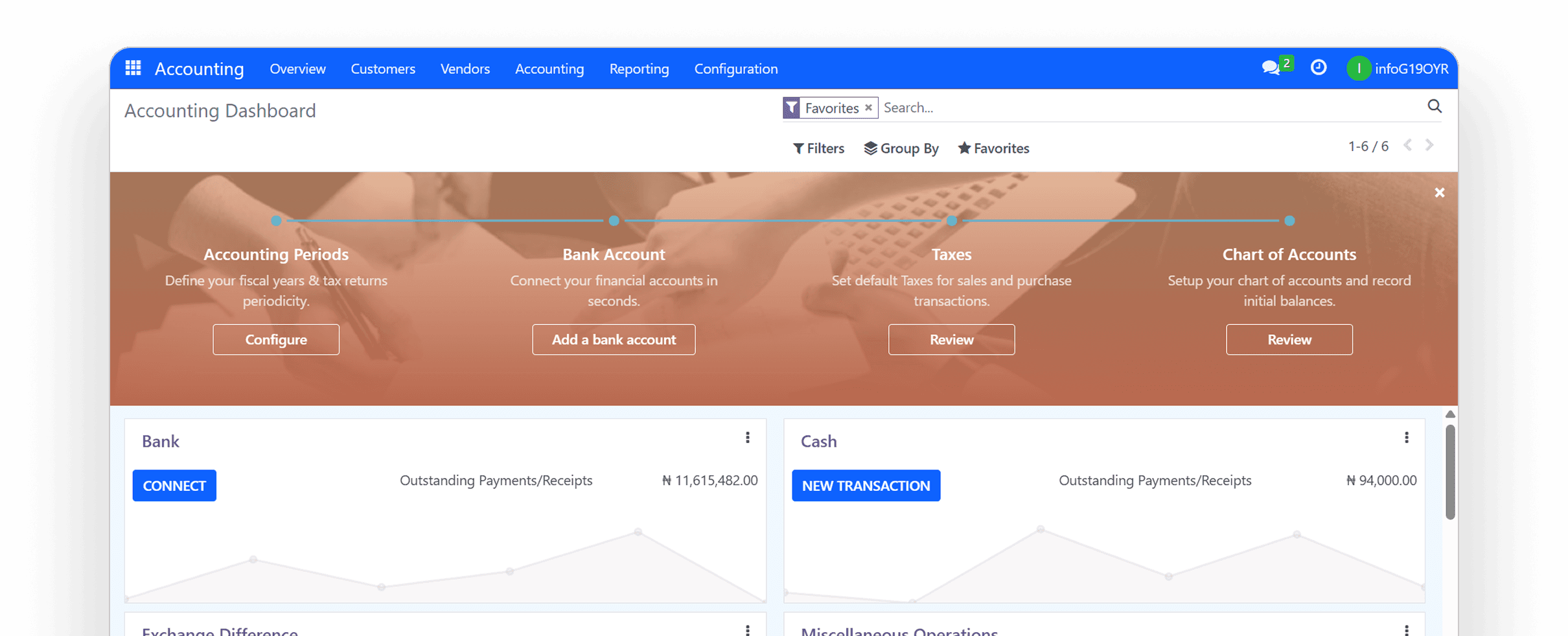
A hospital ERP is not a single application. It is an integrated platform where the clinical side (patient records, consultations, lab results, prescriptions) talks in real time to the operational side (billing, inventory, staff payroll, procurement, reporting).
Ask a hospital administrator in Nigeria what software runs their facility and you will get one of three answers: a legacy billing tool bolted onto spreadsheets, a standalone EMR with no financial module, or — more often than most people admit — nothing at all.
Each of those answers describes the same underlying problem: disconnected systems. And disconnected systems cost money — quietly, consistently, and in ways that rarely appear on a single line of the income statement.
This article breaks down exactly what hospitals lose when they operate without an integrated Enterprise Resource Planning (ERP) system — not in vague terms, but in the specific categories of loss that affect Nigerian private hospitals every day. We will also look at what changes when those systems are finally unified.
First, Let's Define What an ERP Actually Means for a Hospital
In manufacturing and banking, ERP systems are well understood. In healthcare — especially in Nigeria — the term is still treated with suspicion, often dismissed as expensive software built for large organisations on the Lagos Island.
That framing is both outdated and costly.
A hospital ERP is not a single application. It is an integrated platform where the clinical side (patient records, consultations, lab results, prescriptions) talks in real time to the operational side (billing, inventory, staff payroll, procurement, reporting). When a patient is seen in the outpatient department, the ERP simultaneously updates the patient's EMR, generates a bill, deducts the relevant medication from pharmacy stock, logs the HMO encounter if applicable, and records revenue against the department.
All of this happens without anyone manually carrying information from one system to another.
Now consider what happens when each of those functions sits in a separate tool — or on paper.
The Five Categories of Loss
1. Revenue Leakage From Unbilled and Under-Billed Services
This is the largest and least visible cost. In hospitals without an integrated system, billing is dependent on staff manually capturing every service delivered. The doctor prescribes. The nurse administers. The lab runs the test. At discharge, someone attempts to reconstruct the bill from handwritten notes, verbal reports, and memory.
Services get missed. Tests go uncaptured. Consumables are never logged.
What the numbers suggest:
Studies of Nigerian private hospitals estimate that between 15% and 30% of services rendered are never billed.
For a hospital seeing 80 outpatients daily at an average revenue of ₦8,000 per visit, a 20% leakage rate amounts to over ₦4.6 million in lost revenue every month — simply from outpatient encounters alone.
Inpatient and procedure revenue, which is higher-value, compounds this figure significantly.
An integrated ERP closes this gap by making billing automatic. Every order placed in the clinical module — a drug, an investigation, a procedure — simultaneously appears in the billing queue. Nothing leaves the system without a corresponding financial entry.
2. HMO Revenue Lost to Claim Errors and Missed Submissions
For most Nigerian private hospitals, HMO patients represent anywhere from 20% to 60% of patient volume. The relationship that should improve revenue predictability is, for many hospitals, doing the opposite.
The root cause is documentation. HMOs require precise, properly formatted claims submitted within specific windows. When clinical records and billing are managed separately — EMR notes on one system, billing on another, HMO encounter forms on paper — errors multiply. Claims are submitted late, returned for correction, or abandoned entirely.
• Denied claims represent revenue the hospital already delivered and never recovered.
• Tariff underclaiming occurs when billing staff are unsure of the correct HMO rate and default to a lower figure to avoid rejection.
• Capitation reconciliation errors mean hospitals often cannot verify whether the monthly capitation payment from the HMO actually reflects the enrollees seen.
A hospital ERP with built-in HMO management eliminates these problems at the source. Clinical documentation generates claim-ready records. Tariff tables are pre-configured per HMO. Encounter tracking makes capitation reconciliation a matter of pulling a report rather than conducting a week-long manual audit.
3. Pharmacy and Inventory Losses
Hospital pharmacy and supply inventory is one of the most financially significant areas in any facility — and one of the most consistently mismanaged without a system.
In hospitals running manual or disconnected stock management:
• Dispensing is not reliably tied to prescriptions, creating opportunities for shrinkage.
• Expiry management is reactive. Stock expires on shelves because nobody has real-time visibility of aging inventory.
• Reorder decisions are based on visual inspection or gut feel rather than consumption data.
• Suppliers cannot be evaluated on actual delivery performance because there is no purchase order trail.
A conservative estimate:
For a 50-bed private hospital with monthly drug expenditure of ₦3 million, poor inventory management typically results in 10–18% waste through expiry, shrinkage, and emergency procurement at premium prices.
That is ₦300,000 to ₦540,000 per month — between ₦3.6 million and ₦6.5 million per year — not from poor clinical decisions, but from preventable operational failure.
An ERP links pharmacy dispensing to the clinical order, flagging any dispense without a corresponding prescription. It tracks stock levels in real time, alerts on low quantities, and generates purchase orders automatically when reorder points are reached.
4. Staff Time Wasted on Manual Reconciliation
One of the hidden costs of disconnected systems is not financial loss directly — it is the diversion of skilled staff time to administrative reconstruction work that should not exist.
In a typical Nigerian private hospital without ERP integration:
• The finance officer spends several hours each week reconciling the cashier's records against the billing system against the patient register.
• The pharmacy manager does a manual stock count at month-end that takes two to three days.
• The medical records officer chases clinical departments for missing discharge summaries.
• The account officer manually re-enters HMO claim data from clinical notes into a separate submission template.
None of this work adds clinical value. All of it exists because systems are not talking to each other.
When you translate wasted hours into salary cost — and factor in the errors introduced by manual data transfer — the figure is substantial. More importantly, it represents capacity that could be redirected toward patient care, strategic planning, or revenue-generating activity.
5. Decision-Making Without Data
Perhaps the most underappreciated cost of running without an integrated ERP is not the transactions that go wrong — it is the decisions that never get made correctly.
Hospital administrators without real-time operational data manage by anecdote. Which department is most profitable? Which HMO partnership is costing more to service than it generates? What is the actual cost per patient discharged from the surgical ward? Which doctor's patients have the highest readmission rate?
These are not academic questions. They are the questions that determine whether a hospital grows, survives a difficult quarter, or continues subsidising loss-making activities without knowing it.
Without an ERP, the answers require weeks of manual data gathering — and the resulting analysis is already outdated by the time it is complete. With one, the dashboard answers these questions daily.
The Infrastructure Objection — And Why It No Longer Holds
The most common objection Nigerian hospital administrators raise when ERP adoption is discussed is infrastructure: unreliable power and poor internet make cloud-based software impractical.
This was a legitimate concern in 2018. It is not an insurmountable one in 2026.
Modern hospital ERP implementations for the Nigerian market now bundle the infrastructure alongside the software. Solar power systems eliminate dependence on the grid. Starlink and 4G/5G failover connections provide consistent internet access even in secondary cities. Offline-capable system architecture means that clinical operations continue during outages, with synchronisation occurring automatically when connectivity is restored.
The conversation has shifted from "Can we run this system given our infrastructure?" to "How do we acquire the right infrastructure bundle at a cost that makes financial sense?" — and on that question, the math increasingly favours integration.
What Changes When Systems Are Integrated
The benefits of a hospital ERP are not theoretical. Hospitals that have moved from disconnected systems to integrated platforms — regardless of size — report consistent operational improvements within the first six months of go-live.
Commonly reported outcomes after ERP implementation:
Billing capture rate increases: staff report 25–40% more services appearing on final bills within 90 days of go-live.
HMO claim rejection rates fall as documentation quality improves and submission timelines are met automatically.
Pharmacy shrinkage becomes visible and measurable — often for the first time — allowing management to act.
Monthly financial close, previously a multi-week exercise, compresses to days.
Management reporting shifts from retrospective to real-time.
These are not benefits that require a large hospital to realise. A 30-bed private facility with a busy outpatient department and three HMO partnerships has more to gain — proportionally — than a 200-bed teaching hospital with dedicated IT staff.
Choosing the Right System for the Nigerian Context
Not all hospital ERP solutions are built equally for the Nigerian operating environment. When evaluating options, hospital administrators should ask the following questions:
• Does the system include both clinical (EMR) and financial (ERP) modules in a single integrated platform, or is integration an add-on that requires third-party middleware?
• Is HMO management built in, with pre-configured tariff tables for Nigerian HMOs including Hygeia, AIICO, Avon, and others?
• Does the system work offline and sync when connectivity is restored — or does it require constant internet to function?
• What is the go-live timeline, and what training support is provided for clinical and administrative staff?
• Is pricing transparent and denominated in naira, without exposure to foreign exchange volatility?
• Does the vendor offer local support — accessible people who understand the Nigerian healthcare context — rather than a remote helpdesk?
These criteria narrow the field considerably. Most internationally developed HMS platforms fail on HMO integration, local support, and naira-based pricing. Most basic Nigerian billing tools fail on clinical depth and real-time financial reporting.
The category that satisfies all criteria is an integrated, locally-built platform designed from the ground up for African healthcare operations.
The Cost of Waiting
Every month a Nigerian hospital runs without an integrated ERP is a month of revenue lost to unbilled services, HMO claims abandoned, pharmacy stock unaccounted for, and operational decisions made on incomplete information.
The total cost is not a single line on the income statement. It is spread across departments, buried in the gap between what was delivered and what was billed, hidden in the salaries of staff doing manual reconciliation that should not exist, and invisible in the decisions that were never made because the data was never available.
For most Nigerian private hospitals, the investment in an integrated hospital ERP does not require a new source of revenue. It recovers the revenue that was already being generated and never captured.
The question is not whether you can afford to implement one. It is how much longer you can afford not to.
See LafiaLink in Action
LafiaLink is an integrated hospital management platform built for African healthcare facilities, combining EMR, HMS, and ERP in a single system with full HMO integration, offline capability, and a 30-day go-live guarantee.
To schedule a free demo for your hospital, visit axtute.com or speak with our team directly.