Hospital Management Software in Nigeria: What Every Clinic Owner Needs to Know Before Choosing One
If you run a private hospital or clinic in Nigeria, you already know the friction. A patient walks in, and someone is flipping through a physical folder to find their last visit. The billing desk is managing three spreadsheets.
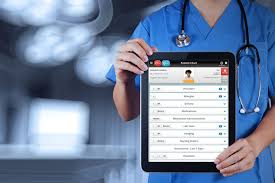
The pharmacy has no idea what the doctor just prescribed. And by the end of the day, a third of your revenue is leaking through gaps that no one can see because nothing is connected.
Hospital management software promises to fix all of this. And it can — if you choose the right one.
But here is the reality: most clinic owners in Nigeria search for HMS solutions, find a long list of options, get overwhelmed, and either delay the decision for months or pick a system based on price alone. Neither approach serves your patients or your business.
This guide breaks down exactly what hospital management software does, what to look for in the Nigerian context specifically, and the critical feature most vendors quietly skip over.
What Is Hospital Management Software and Why Does It Matter in Nigeria?
Hospital management software (HMS) — also called a hospital information management system (HIMS) or electronic health record (EHR) system — is an integrated digital platform that connects every department in a healthcare facility: reception, clinical records, laboratory, pharmacy, billing, and administration.
The goal is simple: every piece of patient and operational data lives in one place, accessible to the right people at the right time.
In markets like the United States or the UK, EHR adoption is near-universal. In Nigeria, the picture is different. Research published in Frontiers in Digital Health found that adoption of electronic medical records among Nigerian healthcare facilities remains in the nascent stages, with regulation still rudimentary and implementation uneven across states. A separate study from PMC found that 79.4% of clinicians working in Nigerian teaching hospitals expressed a desire for additional features absent from the systems they currently use — a significant indicator that most facilities are running on tools that are either underpowered or poorly suited to local conditions.
The demand is real. The gap is real. And that gap is exactly where the right HMS solution can transform the way a Nigerian clinic operates.
The Core Modules That Any Serious HMS Must Cover
Before you evaluate any hospital management software in Nigeria, you need a clear picture of what a complete system looks like. The basics are non-negotiable.
Patient registration and records management is the foundation. Every patient interaction — from first registration to discharge — should be documented, searchable, and accessible across departments without physical folders being carried around.
Outpatient and inpatient management (OPD/IPD) handles the flow of patients through consultations, admissions, ward rounds, and discharges. A good HMS gives doctors immediate visibility into a patient’s history, active medications, and pending investigations without needing to ask the patient to remember.
Pharmacy management connects prescriptions directly from the doctor’s screen to the dispensing counter. This eliminates transcription errors, flags drug interactions, and tracks inventory automatically so you are never blindsided by stockouts.
Laboratory and radiology modules allow test requests to originate from the doctor digitally, with results returned the same way. This closes the loop on one of the most common points of lost revenue and delayed care in Nigerian hospitals — manual lab result sheets that get misplaced or delayed.
Billing and revenue cycle management is where most hospital owners feel the pain of paper-based systems most acutely. An integrated billing module ties every service rendered — consultation fees, investigations, drugs dispensed, procedures performed — directly to a patient’s invoice. Revenue leakage drops significantly.
Reporting and analytics gives hospital directors and medical directors real visibility into their operations: daily revenue, patient volumes, bed occupancy rates, top diagnoses, and staff productivity. Running a hospital without this data is like driving without a dashboard.
HMO and NHIS integration is a Nigeria-specific requirement that many international software vendors miss entirely. If your hospital works with health maintenance organisations or processes National Health Insurance Scheme claims, your HMS needs to speak the language of Nigerian insurance administration out of the box.
The Nigerian Infrastructure Problem Most Vendors Won’t Talk About
Here is the conversation that rarely happens during a software sales pitch: what does your system do when the internet goes down?
In Nigeria, that is not a hypothetical edge case. It is Tuesday afternoon.
A study on EHR implementation in Nigerian hospitals found that poor internet connectivity and power outages were among the top challenges, cited by 65.7% and 62.9% of respondents respectively. These are not minor inconveniences. They are structural realities of operating a healthcare facility in Lagos, Abuja, Enugu, Kano, or anywhere else in the country.
This means the standard selling point of most HMS vendors — cloud-based, always available, accessible from any device — contains a hidden asterisk for Nigerian operators. Cloud-based software is only accessible when your internet connection is. And in a hospital setting, “the system is down” is not an acceptable answer to a patient who needs their medication dispensed or a doctor who needs to review a patient’s history.
The question to ask every HMS vendor you speak to is not “is your software cloud-based?” The question is: “What happens to my operations when the internet is unavailable?”
If the answer is anything other than “everything continues to work normally,” that is a critical gap you need to account for before signing a contract.
This is exactly the problem that LaFiaLink, built by Axtute Digital Health, was engineered to solve. LaFiaLink is a vertically integrated HMS/EHR/ERP platform designed specifically for private clinics and hospitals across Nigeria and Africa — and its architecture is offline-first. The system operates fully without WiFi or a stable power supply. Patient registration, clinical documentation, prescriptions, billing, and inventory management all continue without interruption. When connectivity is restored, the system syncs automatically.
For a private clinic in Lagos running on a generator half the day and dealing with intermittent internet, this is not a feature. It is the difference between running a functional hospital and running a very expensive manual operation with a laptop sitting on the desk.
What to Look for When Evaluating HMS Options in Nigeria
There are a growing number of hospital management software options targeting the Nigerian market. The landscape includes international platforms that have adapted for local use, regional solutions built from the ground up for Africa, and a few genuinely local systems.
When comparing your options, these are the criteria that matter most in the Nigerian context.
Offline functionality. As discussed — non-negotiable. Confirm in writing, not just in the sales pitch.
Naira-based pricing. Software priced in USD introduces forex volatility into your operational costs. Every time the naira moves, your subscription cost shifts. Look for vendors who price in local currency and offer transparent, predictable billing.
Local support with real response times. This is one of the most frequent complaints from Nigerian healthcare operators who have adopted international HMS solutions. When something goes wrong — and at some point, something always does — you need support that understands the Nigerian healthcare context, operates in your time zone, and can reach you by phone or WhatsApp, not just a support ticket system with a 48-hour response SLA.
NHIS and HMO integration. If even a fraction of your patients are covered by health insurance, verify that the system handles claims processing, preauthorisation workflows, and reconciliation in a way that maps to the way Nigerian HMOs actually operate.
Ease of onboarding for non-technical staff. Your receptionist, your pharmacy technician, your billing officer — none of them have a background in software systems. An HMS with a steep learning curve and limited local onboarding support will be abandoned within three months. The best systems are designed with simplicity as a core principle, not an afterthought.
Scalability. Are you managing one location today but planning two or three in the next few years? Your HMS should grow with you. Multi-branch management, centralised reporting, and shared patient records across locations are features you want to confirm before you need them.
Data security and backup. Patient data is sensitive. Your HMS should protect it with encrypted storage, role-based access controls, and reliable backup — especially if you are operating offline or in low-connectivity environments where cloud backup may not always be available.
Common Mistakes Nigerian Hospital Owners Make When Choosing HMS
Choosing based on price alone. The cheapest option often comes without local support, without offline capability, and without the kind of HMO integration your operations depend on. The true cost of a cheap HMS is measured in billing errors, staff frustration, and lost revenue — not the monthly subscription fee.
Not involving clinical staff in the decision. Your doctors and nurses are the people who will use the system every single day. If they find it cumbersome, slow, or disconnected from their actual clinical workflow, adoption will fail regardless of how impressive the features look in a demo.
Underestimating the onboarding period. Transitioning from paper to digital — or from one software to another — takes time. Plan for a proper implementation period, adequate training for all staff, and a parallel running period where both systems operate simultaneously before the switchover is complete.
Ignoring data migration. If you have existing patient records, even in Excel spreadsheets, your new HMS should have a pathway for importing them. Starting completely fresh means losing institutional memory that took years to build.
Choosing a solution that does not understand Nigeria. The most sophisticated HMS built for a European or North American hospital will not arrive pre-configured for NHIS claims, Nigerian drug formularies, the realities of generator-dependent power, or the workflow of a Lagos private clinic. Local context matters.
The Case for Building on Infrastructure That Matches Your Reality
Nigerian healthcare is at a genuine inflection point. The NHIS is increasingly requiring digital record-keeping for claims processing. Patients are demanding shorter wait times and better service. Regulators are moving toward enforcing digital documentation standards. The trend line is clear — hospitals and clinics that delay digital transformation are accumulating a competitive disadvantage that compounds over time.
But the solution has to fit the environment it operates in.
A system that works perfectly in Palo Alto but goes blank when your Abuja clinic’s generator kicks in is not a solution for Nigeria. A platform that charges in USD and has no local support number is not designed with your operating reality in mind. A software vendor that has never interfaced with a Nigerian HMO is going to create significant administrative friction the moment you try to process your first claim.
LaFiaLink was built by Axtute Digital Health specifically to close these gaps. It is a comprehensive HMS/EHR/ERP system that covers every core module a private hospital or clinic needs — patient registration, clinical records, pharmacy, laboratory, billing, HR, and reporting — and does all of it in an offline-first architecture that keeps your operations running regardless of connectivity or power status.
It is not an international platform with a Nigerian subdomain. It is a system built from the ground up with Nigerian healthcare infrastructure, Nigerian insurance systems, and Nigerian clinical workflows at the centre.
Questions to Ask Before You Sign Any HMS Contract
Before you commit to any hospital management software in Nigeria, get clear answers to these questions:
What happens to my system and my data when the internet is unavailable? Can I see a live demonstration of the offline mode?
Is your pricing in Nigerian naira? What is included in the subscription, and what attracts additional fees?
What does onboarding look like? Who trains my staff, how long does it take, and is there on-site support available in my city?
How do you handle NHIS and HMO integration? Can I see how claims processing works in your system?
Who do I call when something goes wrong at 8pm on a Friday? What are your support hours and channels?
Can your system scale to multiple branches? How are patient records shared across locations?
How is patient data backed up, and how is it secured?
Hospital management software is not a luxury purchase for Nigerian private hospitals. It is operational infrastructure — as essential as your laboratory equipment or your electricity supply. The right system reduces revenue leakage, improves patient care, empowers your clinical staff, and gives you the data visibility to run a better organisation.
The wrong system, or no system at all, is a slow tax on everything your hospital is trying to achieve.
The choice of which platform you invest in matters enormously. And in Nigeria specifically, it needs to be a choice made with clear eyes about infrastructure realities, local support availability, and whether the vendor you are trusting actually understands the market they are selling into.
If you are evaluating your options, we would be glad to show you what LaFiaLink looks like in practice — including the offline mode. [Request a demo here.]
